Take action
$185
Stone
Posted in Bellflower, CA
Listed in categories:

Chat securely on the app

Additional images
Description
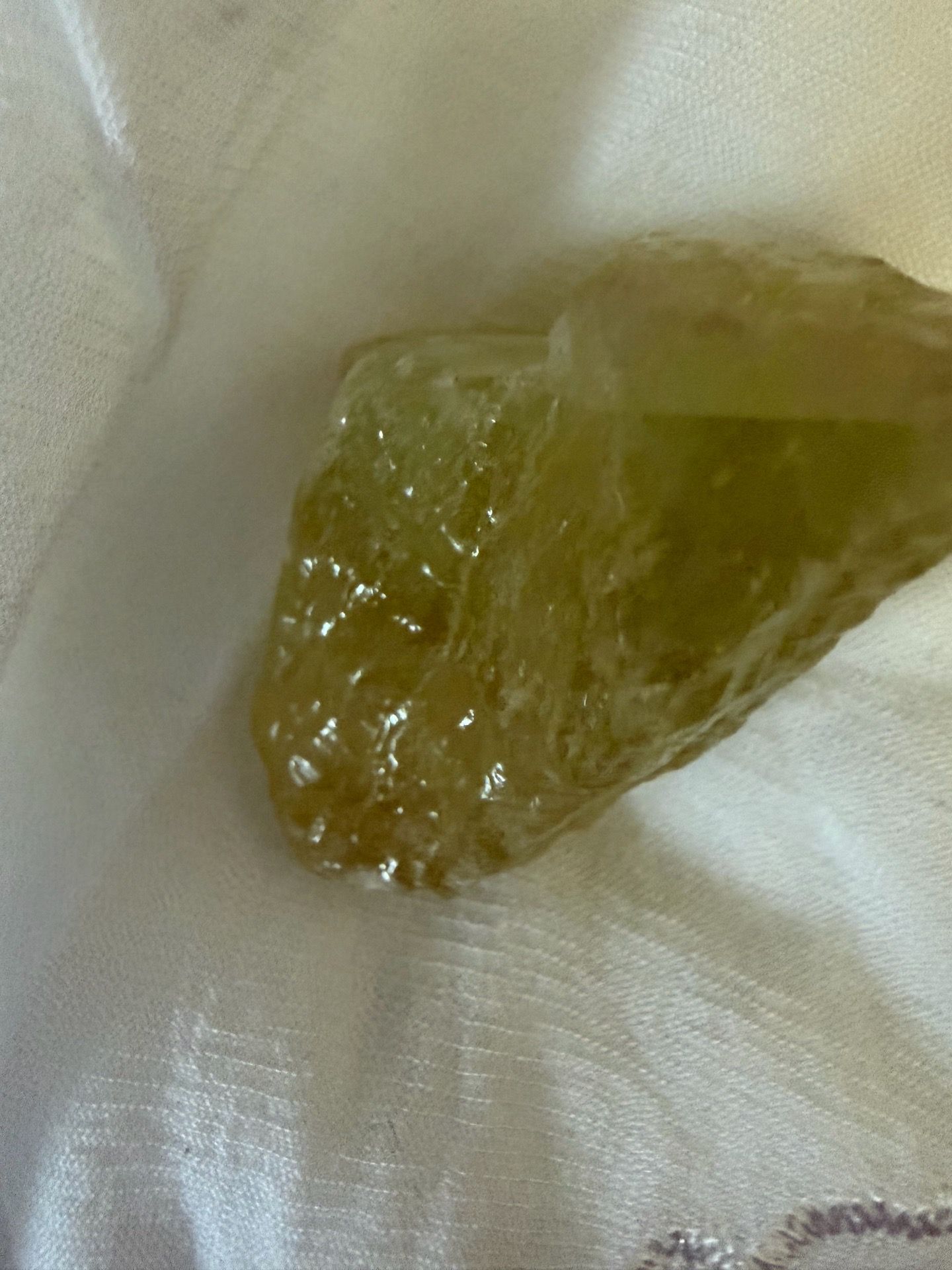
The visual characteristics of this specimen—specifically its translucent yellow-green hue and naturally textured, glass-like surface—strongly resemble Libyan Desert Glass.Likely Identification: Libyan Desert GlassLibyan Desert Glass is a rare natural glass found in the eastern Sahara desert, primarily across the borders of Libya and Egypt. It is nearly pure silica, containing approximately 98 wt% silica, making it the purest natural glass on Earth.Origin: It was formed approximately 26 to 29 million years ago when a meteorite impact or airburst melted desert sands into glass.Scientific Classification: It is classified as an impactite or tektite, a record of major impact events in geological history.Historical Significance: This material was used by ancient humans approximately 10,000 years ago and famously featured in an amulet belonging to King Tutankhamun.Possible AlternativesWhile its appearance is consistent with desert glass, other yellow-toned minerals can share similar colors:Citrine: A transparent, pale yellow to brownish-orange variety of quartz.Lemon Quartz: A variety of quartz that often appears in vibrant sulphur-yellow to pale green https://offerup.com/redirect/?o=dG9uZXMuTWFu-Made Glass: Some man-made glass, like Vaseline glass, can look similar; natural rocks typically have a more complex crystalline structure or lack the perfectly uniform bubbles sometimes found in artificial glass / Esta piedra es muy probablemente vidrio del desierto libio (también conocido como cristal de Libia o tectita dorada).Características PrincipalesOrigen: Es un vidrio natural compuesto por casi un 98% de sílice pura. Se formó hace aproximadamente 29 millones de años debido al intenso calor y presión generados por el impacto de un meteorito o una explosión aérea en el desierto del Sahara, en la frontera entre Libia y Egipto.Apariencia: Se presenta en tonos que van desde el amarillo pálido hasta el verde amarillento o dorado. Suele tener una textura rugosa con hoyuelos naturales causados por la erosión del viento y la arena del desierto.Dureza: Tiene una dureza de 5.5 a 7 en la escala de Mohs.Datos CuriososHistoria: Los antiguos egipcios la consideraban una piedra sagrada. El escarabajo central del pectoral del faraón Tutankamón está tallado en este material.Formación: Para que se forme este vidrio, se requieren temperaturas superiores a los 1,600 °C, más calientes que cualquier roca ígnea común en la Tierra.Debido a su apariencia amarillenta y translúcida, a veces puede confundirse con otras piedras como el cuarzo limón, el citrino o el crisoberilo. Sin embargo, la textura superficial irregular y su procedencia específica del Sahara son rasgos distintivos del vidrio líbico.
Details
Condition
Used (normal wear)
Item location map
Map is approximate to keep seller’s location private.