Take action
$300
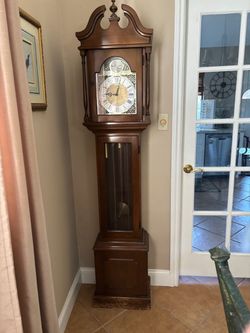
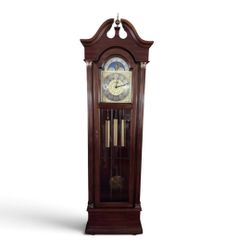
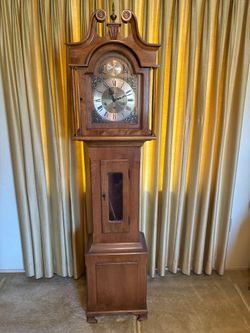
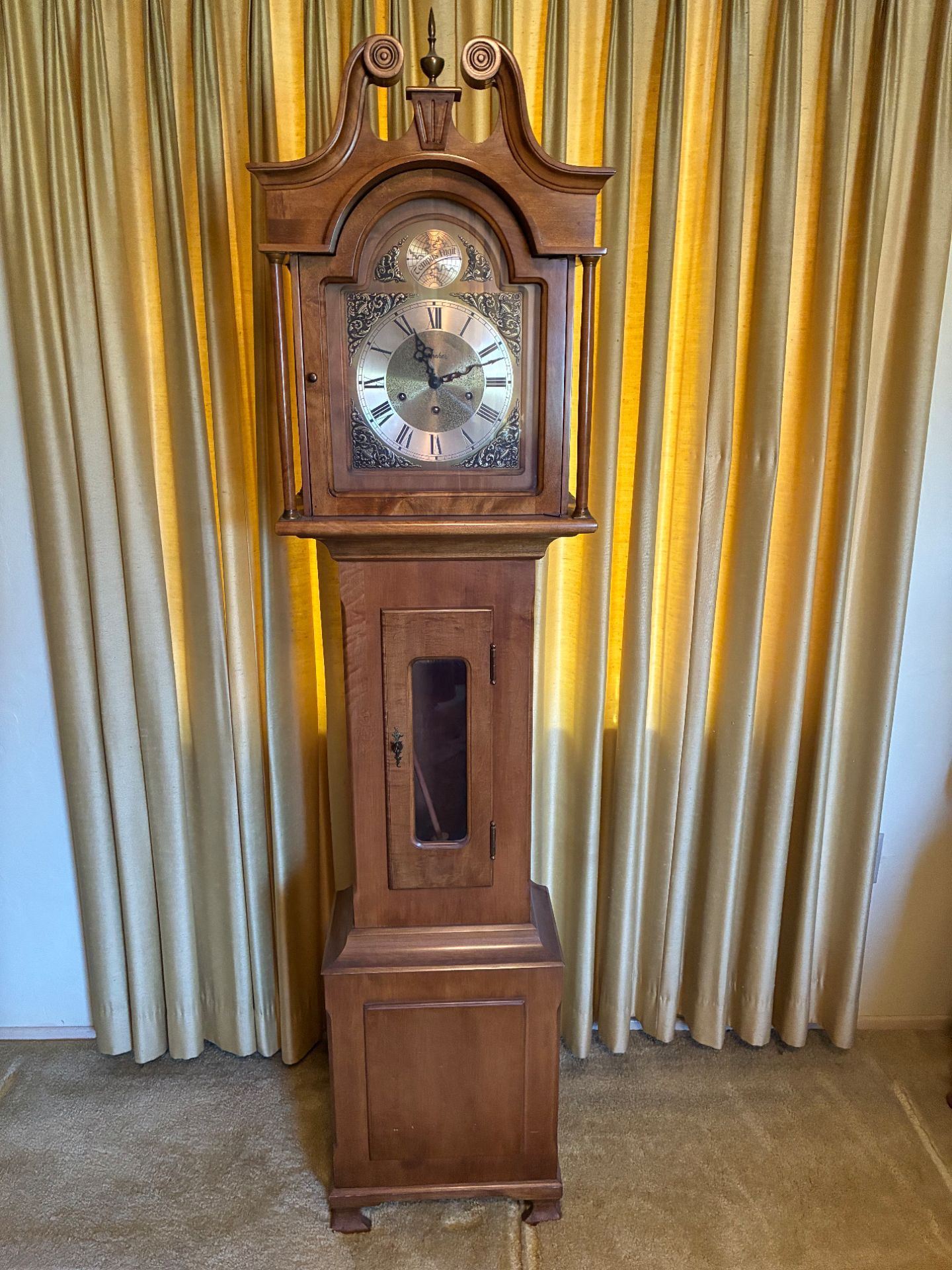
Daneker Grandmother CLOCK (1956) - in great working condition! VALUED AT OVER $750+
Posted 5 days ago in Clovis, CA
Listed in categories:

Chat securely on the app

Additional images
Description
This beautiful and amazingly well built and kept grandmother clock -- Model: H66 Maker: Daneker (Made from Mahagony wood) Built/made: 1956 Retails used for over: $750+ Measurements: 16 1/2" x 70" tall x 9" *** Works amazingly well, for being so old, and Chimes beautifully and works 100%! Also comes with all original papers, receipt, warranty info, and full manual instructions and everything as well. Pickup is in SE Fresno. Background on company: The manufacturer of the Daneker grandfather clocks was the Daneker Clock Company owned by the Millon-Rutherford company. Its founder was Rutherford Daneker, Sr. who had a vision of building the finest clocks in the US. Mr. Daneker travelled to southern Pennsylvania to study the craft of clock making. There he learned about the work of Hepplewhite and Duncan Phyfe who accompanied him to Europe so he could speak to master clock watchers who learned their clock making skills from their ancestors. After acquiring the knowledge he needed, he returned to Fallston, Maryland, gathered up his sons and recruited some workers to start building clocks. This was in the late 40s; unfortunately the factory burned down in 1969. Labor of Love Topmost in Mr. Daneker’s mind was quality. He made sure that his grandfather clocks were made with the finest wood. The cabinets for the grandfather clocks had superb finishes and the initial reaction of anyone seeing them for the first time would be “top quality.” Wood selection for Daneker clocks was based on three criteria: grain, hue and tenure. The company used mahogany, known for its tight grain and steak patterns. Mahogany is also known for producing resonant sounds. Cherry was also used. Its grain structure was good and the Daneker clocks made with this type of wood had either light or dark finishes. Then there was walnut (popular for various shades of brown), maple (for its strength and subtle graining) and pine (that gave off a knotted or swirling appearance, perfect for creating a homey atmosphere). Daneker grandfather clock workers treated each piece with reverence, turning out classically-styled clocks with distinctive moldings and carvings. Each clock was individually made so that no two Daneker clocks are identical. The face had numerals in brass. Daneker clocks also have moon dials made of nickel and drawn with the colors of nature. A Daneker clock would rightfully be considered an American family heirloom. Daneker Clock Movement and Sound Most Daneker grandfather clocks use Mauthe movements, a German innovation. Much of the manufacturing and finishing for these clocks were influenced by clockmakers in the Black Forest region of West Germany, home to expert craftsmen. Each movement is installed by hand to ensure timekeeping reliability. They are also tuned by ear. Just as there are no two Daneker clocks that look alike, no two Daneker clocks sound alike. Daneker clocks are equipped with chimes that go off every fifteen, thirty, forty-five and 60 minutes. There are supposedly more than 400 clock and watch movements; the Mauthe movement is exclusively German. In an online article written by a certain “George L”, there were pictures of some grandfather clocks that had the Mauthe trademark. The Mauthe company was founded by Friedrich Mauthe in a German town called Schwenningen in the Black Forest region. The company started as a supplier of clockmaker tools and a few years later were also manufacturing casings. The company closed in 1976 owing to tough times. Note that in the 1920s, 60% of German clocks that the UK was importing bore the Mauthe trademark. Tom Daneker – perhaps a grandson or great grandson of the grand master – has a Daneker grandfather repair shop in Towson, Maryland.
Details
Condition
Used (normal wear)
Item location map
Map is approximate to keep seller’s location private.